Visualization for Beginners: Simple Techniques to Manifest Your Goals
Learn how to use visualization techniques effectively to clarify your goals, reduce stress, and improve focus. Start manifesting your dreams today!


Have you ever caught yourself daydreaming about nailing a big presentation or finally feeling fit and energized? That’s the seed of visualization, a simple mental technique that can help you turn your goals into reality. In this article, I’ll walk you through what visualization is, how it works in your brain, and share practical steps to start your own practice today.
You don’t need any special tools or experience, just a few quiet minutes a day. Let’s get started.
Key Takeaways
- Visualization uses all five senses to create a detailed mental image of your goal.
- Practice daily for 5-10 minutes, consistency beats longer sessions.
- Visualize the process and steps, not just the end result.
- Pair visualization with deep breathing or meditation for better focus.
- If visualization causes distress, stop and talk to a mental health professional.
What is Visualization and How Can It Help You?
Visualization is a mental technique where you create vivid mental images of a desired outcome. Think of it as a focused daydream where you rehearse a specific goal, whether that is acing a presentation or feeling healthier. It is used for goal setting, motivation, and stress reduction. Consistent practice clarifies your objectives and can improve performance by mentally preparing you for what lies ahead.
How Visualization Works in Your Brain

How Your Brain Processes Visualization
Your brain often treats an imagined experience much like a real one. When you vividly picture yourself succeeding, the same neural pathways fire as if you actually did it. This can strengthen the connections needed for that action, making the real attempt feel more familiar and doable.
Shifting Focus and Reducing Anxiety
Visualization can help pull your attention away from negative thought loops and toward positive outcomes. By mentally rehearsing a calm, successful scenario, many people find their anxiety drops because the brain registers the imagined event as preparation rather than a threat.
The Role of Emotions and Subconscious Beliefs
Engaging your emotions during visualization makes the experience far more impactful. If you feel the pride or relief of achieving your goal, the brain encodes that feeling as a real memory. Over time, this can influence your subconscious beliefs, aligning them with what you consciously want to achieve.
Essentials for Your Visualization Practice
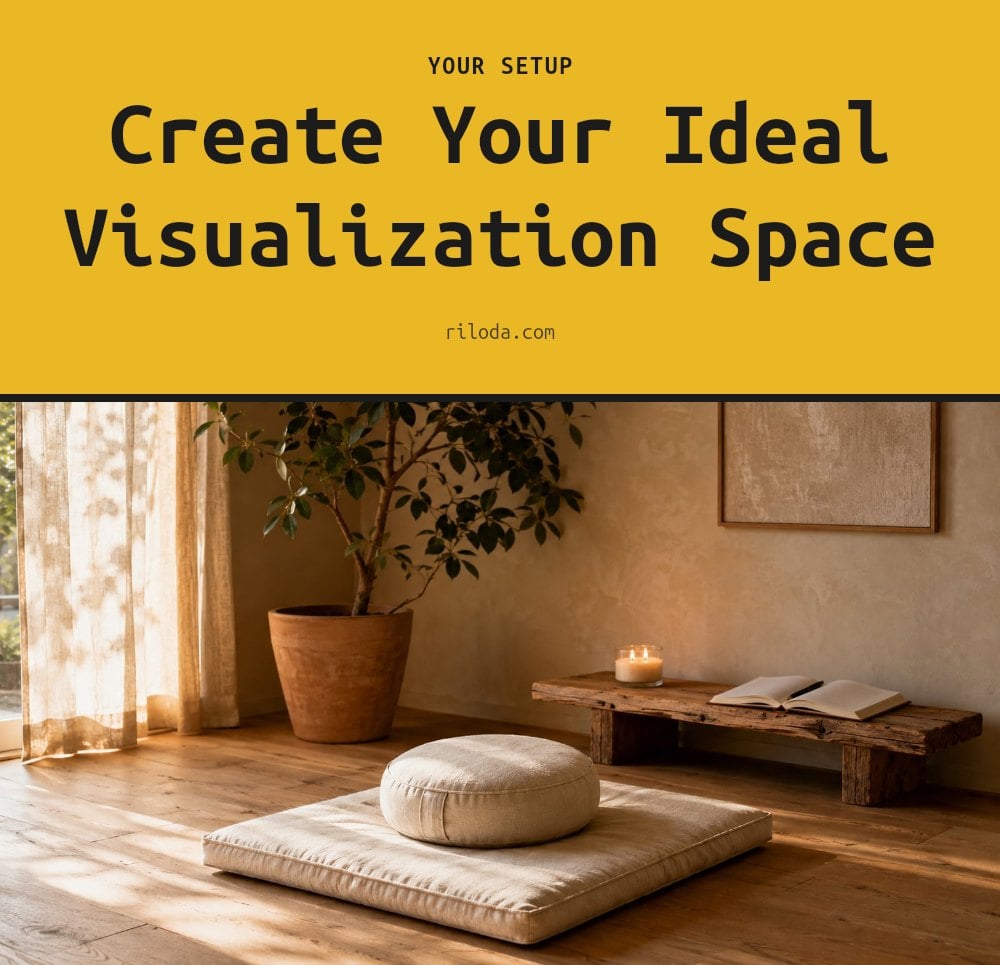
You don’t need much to get started. A quiet space where you won’t be interrupted for a few minutes is the main requirement. A comfortable chair or a spot on the floor where you can sit or lie down helps you relax fully.
- Quiet space: A corner of a room, a closed office door, or even a park bench away from noise.
- Comfortable position: Sitting upright or lying down, whichever lets you stay alert but relaxed.
- Optional calming music or nature sounds: Soft background audio can drown out distractions and deepen focus.
- Optional journal: Writing down your goal or what you saw during the session can reinforce the mental image.
Step-by-Step Guide to Effective Visualization

- Find your space: Choose a quiet spot where you can sit or lie down without interruptions for 5-10 minutes.
- Relax your body: Close your eyes and take three slow, deep breaths. Let your shoulders drop and your jaw loosen.
- Define your goal: Before you start, be clear on one specific outcome you want to visualize. Vague goals lead to vague images.
- Build the scene with all five senses: See the environment, hear the sounds, feel the temperature or texture, smell the air, even taste what might be there. The more senses you include, the more real it feels to your brain.
- Feel the emotions: Focus on the positive feelings tied to achieving that goal. Pride, relief, excitement, gratitude. Let them wash over you.
- Visualize the process, not just the finish line: Imagine the steps you take to get there. The practice sessions, the conversations, the small wins along the way. This prepares you for the actual journey.
- Make it a daily habit: Even 5 minutes a day beats an hour once a week. Consistency trains your brain to treat the goal as real.
Common Visualization Mistakes and How to Avoid Them
Only visualizing the end result: It is tempting to picture yourself crossing the finish line, but skip the steps to get there. Instead, visualize the process: the early morning training, the small setbacks you work through, the choices you make each day. That mental rehearsal prepares you for the real work.
Not engaging emotions: A flat, detached image has little impact. Actively feel the relief, pride, or joy you would experience when your goal is met. That emotional charge signals your brain that this outcome matters.
Expecting magic: Visualization is a tool to support action, not replace it. You still need to take real steps. Treat it as your mental rehearsal, not a wish machine.
Giving up too soon: Results build over weeks and months. Consistency matters more than session length. Stick with it even when you don’t notice changes right away.
Vague visualizations: “I want to feel calm” is too broad. Get specific: where are you, what time of day, what sounds, what does calm actually feel like in your body? Detail makes the image believable to your brain.
Passive approach: Daydreaming lets your mind drift. Active visualization requires you to deliberately construct each sensory detail and hold your focus. Treat it as a mental workout, not a break.
Top Tips for Enhancing Your Visualization Practice

Combine with relaxation: My tip: Pair your visualization with deep breathing or a short meditation. A relaxed body and quiet mind make the mental images feel more vivid and real.
Start small: Even 5-10 minutes daily beats a long session once a week. Short, consistent practice builds the habit without feeling like a chore.
Journal your progress: Write down your specific goal before you start a session. Afterward, note any details or emotions that stood out. This reinforces the experience and helps you notice patterns over time.
Stay positive: Your mind will wander, and negative thoughts may creep in. Gently redirect your focus back to your intended scene without judging yourself. Each redirection strengthens your mental control.
Be patient: I’ve tried them all, and consistency always beats intensity when it comes to long-term results. Trust the process and keep showing up.
How Long Until You See Results?
Timeline: Consistent daily practice for 5-10 minutes can start to show benefits in focus and mindset within a few weeks. You may notice you feel calmer or more prepared for a specific goal.
Deeper Impact: More significant changes, like shifts in subconscious beliefs or long-term behavior patterns, are typically observed over several months of regular practice.
Cost: Visualization is a free practice. It requires only your time and mental focus. No apps, tools, or subscriptions needed.
When to Consult a Professional
If visualization causes significant anxiety, distress, or intrusive thoughts, stop the practice and talk to a mental health professional. It is not meant to feel harmful or overwhelming.
If you have a history of psychosis or severe mental health conditions, consult a healthcare provider before starting any new mental practice, including visualization.
Remember, visualization is a complementary tool. It should not replace professional medical or psychological treatment for health conditions. Use it to support, not substitute, your care plan.
Frequently Asked Questions
How long should I visualize each day?
Aim for 5-10 minutes daily. Consistency matters more than length, so even a short session every day is better than a long one once a week. Start with five minutes and build up if it feels comfortable. You can also break it into smaller chunks throughout the day if that works better for you.
Can visualization help with anxiety?
Many people find that visualization can help reduce anxiety by shifting focus away from worries and toward positive outcomes. It works well when combined with deep breathing or relaxation techniques. However, if you experience significant distress or have an anxiety disorder, it’s wise to talk to a mental health professional for personalized guidance.
Is visualization the same as daydreaming?
Not quite. Daydreaming is usually unstructured and passive, while visualization is a deliberate, active practice with a specific goal in mind. You’re not just letting your mind wander; you’re intentionally creating a detailed mental scenario and engaging your senses and emotions to make it feel real.
What if I can’t see clear images?
That’s completely normal, especially at first. Don’t force it. Some people see vivid pictures, while others feel sensations or just have a sense of the scenario. Focus on what you can perceive, like sounds, feelings, or emotions, and let the images come naturally. With practice, your mental imagery often becomes clearer.
Can I visualize for multiple goals at once?
It’s possible, but for beginners, it’s usually more effective to focus on one goal at a time. Trying to visualize several outcomes at once can dilute your focus and make the practice feel scattered. Once you’re comfortable with one goal, you can expand or rotate between goals on different days.
Final Thoughts
Visualization is a gentle but powerful mental exercise that can sharpen your focus and calm your mind. My tip: start with one specific goal, and spend just five minutes each morning picturing the steps you’ll take that day. Expect small shifts in your mindset within a few weeks, not overnight magic. The real change comes from pairing your mental rehearsal with consistent action. Give it a try, and see how it feels to move toward your goals with more clarity and confidence.
This article is for general informational purposes only and is not a substitute for professional medical or psychological advice. Visualization is a complementary tool and should not replace treatment for any health condition. If you experience significant distress, or have a history of severe mental health issues, please consult a qualified healthcare provider.
More Blog ideas
- How to Use Rose Water for Radiant Skin and Healthy Hair
- What Is My Personality Type? Understanding Yourself Better
- How to Clean Your Pores at Home
- Vitamin C Benefits for Skin and Health Plus the Best Foods
- How to Start Shadow Work for Deeper Self-Understanding
- How to Prep Your Hair Before Bleaching for Less Damage
- How to Prepare Sea Moss Gel at Home for Wellness
- How to Use Rice Water for Glowing Skin and Shiny Hair
- How to Find Morning Motivation When You Want to Stay in Bed
- Filing Nails: How to File Nails Correctly for Strong, Healthy Fingernails
- Healthy Coping Skills: Proven Strategies for Difficult Times
- Simple Ways to Romanticize Your Life Every Day