How to Read Body Language: Simple Tips for Better Communication
Unlock the secrets of nonverbal cues with these simple tips on how to read body language, enhancing your communication and understanding of others.

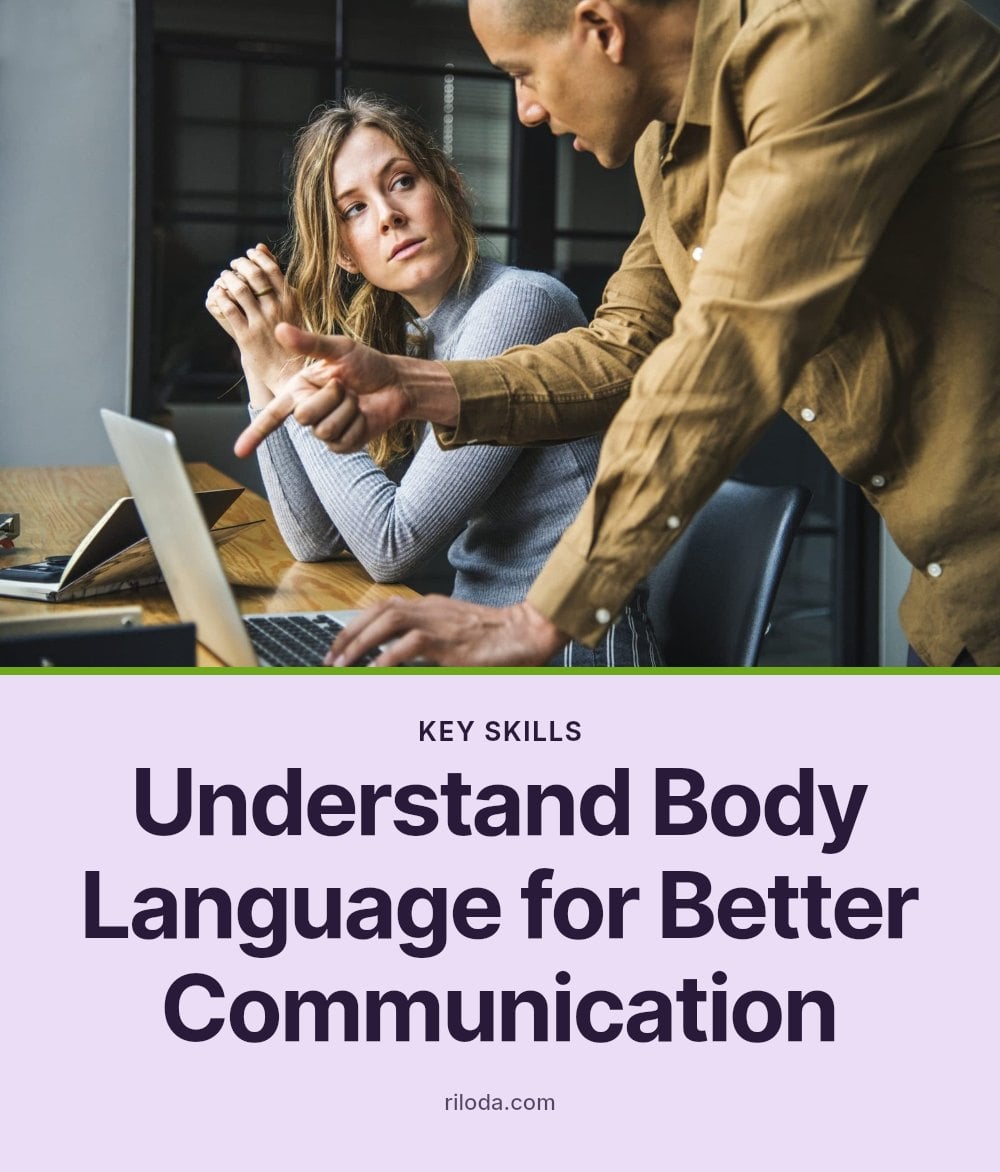
Have you ever wondered what someone is really thinking, even when their words say otherwise? Body language, the silent stream of gestures, posture, and expressions we all send out, often reveals more than speech. The good news is that you can learn to read these cues, and it’s a skill that gets sharper with practice. In this article, I’ll walk you through a practical, step-by-step method for observing and interpreting body language, bust some common myths, and share tips to help you become a more perceptive communicator.
Key Takeaways
- Look for clusters of cues, not single gestures, to read body language accurately.
- Watch for changes in behavior, like posture or blink rate, as signs of shifting comfort.
- Don’t assume crossed arms always mean defensiveness; it’s often self-soothing.
- Respect personal space, as proxemics varies by culture and can cause offense.
- Practice consistently over time to improve your reading skills, as it’s an ongoing process.
What is Body Language and Why Does it Matter?
Body language is the silent conversation we’re all having, every moment, without saying a word. It includes gestures, posture, facial expressions, and eye contact, and it often reveals what someone is truly thinking or feeling, sometimes more honestly than their words. Understanding these nonverbal cues lets you better interpret others and sharpen your own communication, making every interaction clearer and more intentional.
Step-by-Step: How to Observe and Interpret Body Language
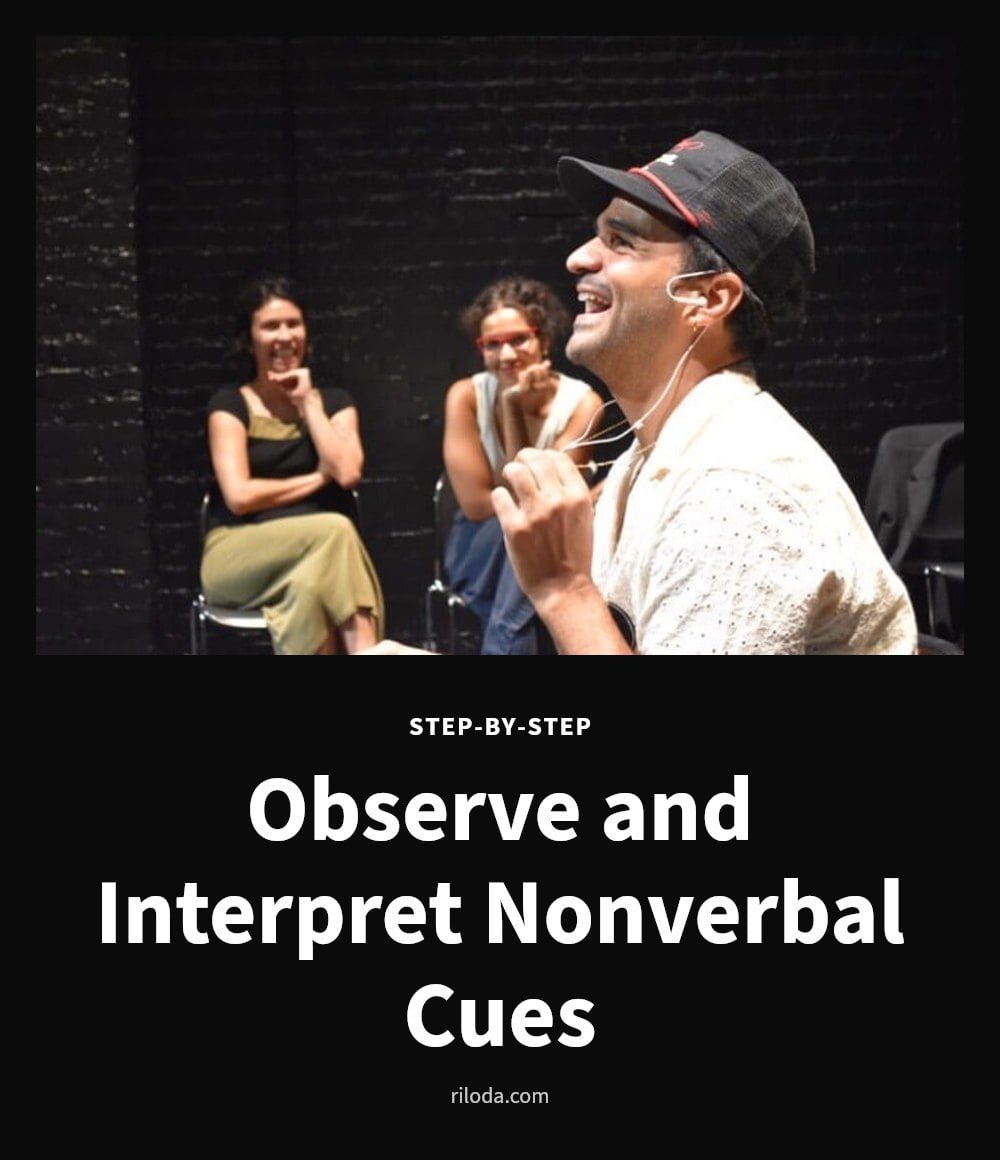
- Scan for all nonverbal cues first: Don’t zero in on one gesture. Look at how someone dresses, walks, and carries themselves. These broad observations set the baseline for what’s normal for that person in that moment.
- Spot changes in behavior: A shift in posture, blink rate (average is 8 times per minute), or how often someone checks their watch can signal a change in comfort or emotion. These shifts are often more telling than a static pose.
- Assess overall appearance: Start with the hair, is it healthy and well-groomed? Then look at the forehead for signs of stress. The glabella, the small area between the eyes, is one of the first places to reveal information.
- Examine the eyes and face: Check for redness or fatigue. A ‘bunny nose’ (wrinkling the nose) can indicate dislike, so note it as a facial cue to observe further. Compressed lips suggest something is bothering the person, and lips sucked inward mean significant distress.
- Notice cheek and jaw movements: Rubbing the tongue against the inside of the cheek is a pacifying behavior. If someone tries to hide these actions, they are managing their perception, and you should question what’s going on.
- Check head tilt and shoulders: A tilted head usually means the person is relaxed. If it disappears, there’s likely an issue. Watch the shoulders: if both shoot up quickly when a question is asked, it suggests uncertainty.
- Interpret hand gestures: Stiff, interlaced fingers forming a ‘teepee’ shape, moving slowly back and forth, can indicate trouble. This is different from ‘steepling,’ where fingertips touch in a confident gesture. ‘Arms akimbo’ (hands on hips) signifies territoriality; thumbs pointed forward can indicate inquisitiveness.
Tip: Always observe clusters of signals, not isolated gestures. And remember, we are always transmitting information nonverbally, so use these steps to assess what’s being transmitted in the moment, not to make lasting judgments.
If you learn better by watching, this 15-minute video from WIRED shows every step.
Common Body Language Myths Debunked
Myth: Crossing arms always means someone is defensive or blocking you.
Reality: It’s often a self-soothing action, like a self-hug, especially in public settings. Don’t assume it’s a sign of resistance.
Myth: Looking away or in a certain direction means someone is lying.
Reality: It often just indicates cognitive processing. The person is thinking or recalling information. Direction of gaze is not a reliable sign of deception.
Myth: Clearing the throat, touching the nose, or covering the mouth are definitive signs of lying.
Reality: These are common self-soothing or pacifying behaviors. There is no scientific ‘Pinocchio effect’ for deception. Humans are generally poor at detecting lies, so rely on clusters of cues, not single gestures.
Mistakes to Avoid When Interpreting Body Language
Interpreting one gesture in isolation: Always look for clusters of signals and consider the overall context. A single cue, like crossed arms, can mean defensiveness or simply self-soothing in public.
Assuming universal meanings: Some gestures are culturally specific. A nod in Western culture means agreement, but in parts of Eastern Europe it can mean disagreement.
Over-analyzing every movement: This can lead to misinterpretations or paranoia. Focus on significant shifts and consistent patterns, not every blink or fidget.
Ignoring your own body language: Be aware of how your nonverbal cues might be perceived by others. You are always transmitting information, whether you realize it or not.
Believing body language is a foolproof lie detector: It indicates discomfort or stress, not necessarily deception. Humans are generally poor at detecting deception, and behaviors like touching the nose or clearing the throat are common pacifying actions, not signs of lying.
Tips for Improving Your Body Language Reading Skills

Start by looking for clusters of signals. A single gesture can mean many things, but when several cues align, you can read them with more confidence. For example, crossed arms plus a tilted head and a slight lean forward tells a different story than crossed arms alone.
Consider the context before you interpret anything. The same posture means one thing in a job interview and another at a casual dinner with friends. Relationship dynamics matter too: a relaxed slouch with a close friend is normal, but with a new client it might signal disrespect.
Pay attention to changes rather than static poses. A sudden shift in posture, a quick glance at the watch, or a change in blink rate can reveal more than a fixed position. The average blink rate is about 8 times per minute, so a noticeable jump from that baseline is worth noting.
- Practice active listening: Nod occasionally and lean slightly forward to show engagement. These cues also help you stay focused on the speaker’s nonverbal signals.
- Maintain balanced eye contact: Too little can suggest shyness or evasiveness, while too much can feel aggressive. Aim for a natural, steady gaze that you hold for a few seconds before looking away.
The Importance of Personal Space and Cultural Nuances

Personal Space and Cultural Nuances
Personal space, or proxemics, is not universal. In some cultures, people stand close and touch frequently during conversation, while in others, an arm’s length of distance feels comfortable. Invading someone’s personal bubble can cause real discomfort or offense, even if your intention is friendly.
Gestures also carry different meanings across cultures. A thumbs-up that signals approval in Western settings can be offensive in parts of the Middle East, and a head nod might mean agreement in one country but simply acknowledgment in another. When you travel or work with people from different backgrounds, observe how close they stand and how they use their hands before mirroring their behavior.
My tip: When you’re unsure about a cultural norm, follow the other person’s lead on distance and touch. It’s the safest way to avoid misunderstandings.
Frequently Asked Questions
How much of communication is nonverbal?
While exact percentages vary by study, body language is widely considered to be more impactful than spoken words when it comes to conveying emotions and attitudes. This means that in many interactions, the nonverbal signals you send and receive can carry more weight than the actual words used.
Are facial expressions the same in all cultures?
Basic emotions like happiness, sadness, anger, fear, surprise, and disgust are expressed through facial expressions that are generally recognized across cultures. However, the rules for when and how to display these emotions can differ, and some gestures have culture-specific meanings, so it’s important to consider context.
Can I learn to control my own body language?
Yes, you can become more aware of your own nonverbal signals and consciously adjust them. For example, you can practice maintaining appropriate eye contact, using open postures, and avoiding excessive fidgeting. The more you practice, the more natural these behaviors will become, helping you project confidence and receptiveness.
How long does it take to get good at reading body language?
Learning to read body language is an ongoing skill that improves with consistent observation and practice over time. There’s no set timeline, but you can start noticing improvements within a few weeks if you regularly apply the principles, such as looking for clusters of cues and observing changes in behavior. The key is to be patient and keep practicing.
Does body language always tell the truth?
No, body language is not a foolproof lie detector. While certain cues can indicate discomfort or stress, they don’t necessarily mean someone is lying. People may fidget or avoid eye contact for many reasons, and some are skilled at controlling their nonverbal signals. It’s best to interpret body language as a guide, not as absolute proof.
Final Thoughts
To get better at reading body language, start by observing clusters of cues and always consider the context. Look for changes in a person’s baseline behavior, like a shift in posture or an increased blink rate, as these are often the most telling. Remember that this skill takes time, so be patient with yourself and practice in everyday conversations. Over the coming weeks, you’ll likely notice that you pick up on nonverbal signals more naturally, which can lead to deeper connections and fewer misunderstandings. My tip: keep a mental note of the cues you spot and check them against the person’s words to see how often they align.
More Blog ideas
- How to Use Rose Water for Radiant Skin and Healthy Hair
- What Is My Personality Type? Understanding Yourself Better
- How to Clean Your Pores at Home
- Vitamin C Benefits for Skin and Health Plus the Best Foods
- How to Start Shadow Work for Deeper Self-Understanding
- How to Prep Your Hair Before Bleaching for Less Damage
- How to Prepare Sea Moss Gel at Home for Wellness
- How to Use Rice Water for Glowing Skin and Shiny Hair
- How to Find Morning Motivation When You Want to Stay in Bed
- Filing Nails: How to File Nails Correctly for Strong, Healthy Fingernails
- Healthy Coping Skills: Proven Strategies for Difficult Times
- Simple Ways to Romanticize Your Life Every Day