How to Prioritize Your Life and Achieve Your Most Important Goals
Learn effective ways to prioritize your life, manage your time better, and reduce stress. Discover strategies to focus on what truly matters and achieve.


You know the feeling: your to-do list is a mile long, but by the end of the day, you haven’t touched the things that really matter. Prioritizing your life isn’t about squeezing more into your schedule. It’s about making sure your time and energy go toward what truly counts for you. This article walks you through practical steps and simple frameworks to help you identify your top goals, reduce overwhelm, and make steady progress.
Key Takeaways
- Identify your core values first, so you know what ‘important’ really means for you.
- Use the Eisenhower Matrix to separate urgent tasks from truly important ones.
- Break big goals into small steps, then schedule dedicated time for them.
- Review and adjust your priorities weekly or monthly as life changes.
- Learn to say ‘no’ to non-essential requests to protect your time for what matters.
What Does It Mean to Prioritize Your Life?
Prioritizing your life means identifying what truly matters to you and aligning your actions with those values. It’s not just about making a to-do list; it’s about strategically allocating your limited resources, time, energy, and attention, to achieve your most important goals. When you prioritize effectively, you reduce stress, increase productivity, and create a greater sense of purpose and fulfillment.
Tools to Help You Prioritize
You don’t need fancy gear to start prioritizing. A planner or journal helps you track tasks and reflect on progress. A digital calendar or task management app handles scheduling and reminders. A simple notebook and pen are perfect for quick idea capture and brainstorming. Whiteboards or sticky notes offer visual organization and flexibility.
My tip: A simple notebook often works best because it keeps everything in one place without digital distractions.
Your Step-by-Step Guide to Prioritizing

Here is a step-by-step guide to start prioritizing effectively.
- Identify your core values and long-term goals: This defines what ‘important’ means to you. Without this foundation, you can’t distinguish between tasks that truly matter and those that don’t.
- Break down large goals into smaller steps: A big goal like “get organized” is overwhelming. Break it into specific actions like “clear kitchen counter” or “set up a filing system.”
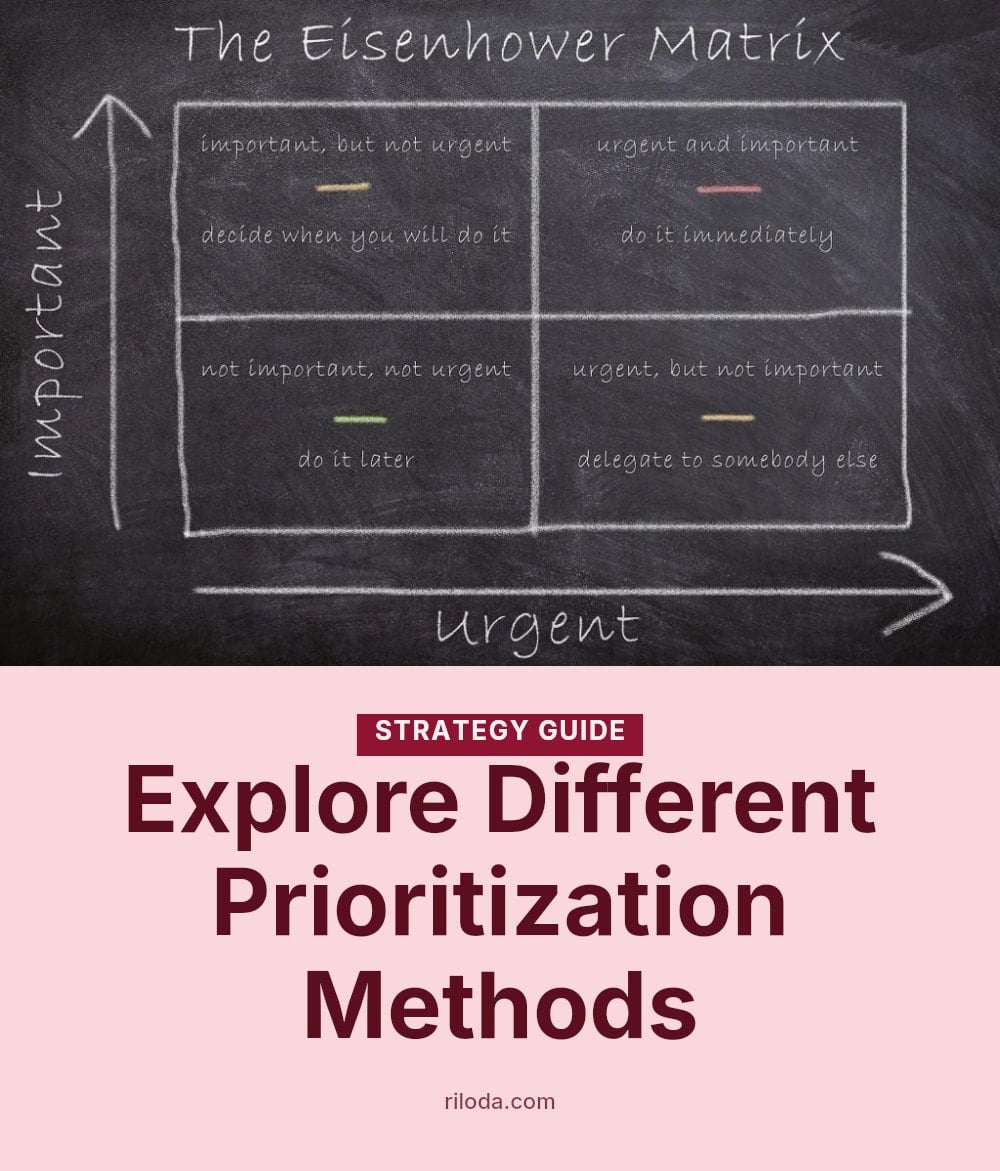
- Categorize tasks using the Eisenhower Matrix: Divide tasks into four quadrants: Urgent/Important (do now), Not Urgent/Important (schedule), Urgent/Not Important (delegate), and Not Urgent/Not Important (eliminate). This framework clarifies what needs your attention.
- Schedule dedicated time for top priorities: Block out time on your calendar for your most important tasks, and turn off notifications during that period to stay focused.
- Learn to say ‘no’: Politely decline non-essential requests that don’t align with your priorities. This protects your time and energy for what matters.
- Delegate tasks when possible: Especially for urgent but not important tasks, ask someone else to handle them so you can focus on higher-impact work.
- Build in buffer time: Unexpected events happen. Add buffer time to your schedule to accommodate delays without derailing your whole day.
My tip: Start small. Pick just one or two steps from this list and practice them for a week before adding more.
Popular Prioritization Methods to Try
Different methods work for different people. Here are four popular ones to try.
The Eisenhower Matrix
This framework categorizes tasks into four quadrants: Do (urgent and important), Decide (important but not urgent), Delegate (urgent but not important), and Delete (neither urgent nor important). It helps you see what truly deserves your time. Tip: Write each task on a sticky note and physically move it into the correct quadrant on a whiteboard for a clearer picture.
Eat That Frog
This method suggests tackling your most challenging or important task first thing in the morning. Once it’s done, the rest of the day feels easier. Good to know: Identify your “frog” the night before so you can start working on it immediately after waking.
The Pareto Principle (80/20 Rule)
This principle states that roughly 80% of your results come from 20% of your efforts. Identify that 20% of tasks that yield the most significant outcomes and focus on those first. Pro move: Review your completed tasks from last week and highlight the two or three that made the biggest difference.
The ABCDE Method
Assign letters to tasks on your to-do list: A for most important, B for important, C for nice to do, D for delegate, and E for eliminate. Work through A tasks before touching B or C items. Quick tip: Be honest with yourself about which tasks truly belong in the E category and remove them without guilt.
Common Prioritization Mistakes and How to Fix Them
Confusing urgency with importance: Urgent tasks scream for attention, but important tasks build your future. Use the Eisenhower Matrix to separate them. A ringing phone is urgent; planning your career goals is important. Focus on importance first.
Not aligning tasks with personal values: If a task doesn’t serve your core values or long-term goals, question why it’s on your list. My tip: I keep my top three values written in my planner. Before adding anything, I check if it fits.
Overestimating how much can be accomplished: Be brutally realistic about your time and energy. It’s better to under-promise and over-deliver to yourself. Block out buffer time for unexpected tasks.
Allowing distractions to derail focus: Use a timer, like a 25-minute Pomodoro, and turn off notifications to stay focused. A dedicated focus block with no phone in sight works wonders.
Neglecting self-care: Prioritize sleep, movement, and downtime as non-negotiables. They fuel your energy for everything else. Burnout doesn’t help anyone.
Smart Tips for Sustained Prioritization

Review Regularly: Review and adjust your priorities weekly or monthly. Life changes, and your list should too. A Sunday evening check-in helps me reset for the week ahead.
Batch Similar Tasks: Group emails, phone calls, or errands together. This reduces mental switching and improves efficiency. I batch all my admin work on Tuesday mornings.
Set Clear Goals: Make your goals specific and measurable. Instead of “get organized,” try “clear the kitchen counter by Friday.” Clear goals make prioritization obvious.
Avoid Multitasking: Focus on one high-priority task at a time. Quality and speed both improve when you give your full attention.
When to Seek Professional Support
If chronic stress from poor prioritization is negatively impacting your mental or physical health, consider speaking with a therapist or counselor. Feeling consistently overwhelmed, anxious, or unable to manage daily demands despite trying strategies is a sign to seek help.
Neglecting essential responsibilities like financial obligations or health appointments due to persistent misprioritization can have serious consequences. A professional can help you build realistic systems and address underlying causes. Asking for support is a smart step, not a failure.
Frequently Asked Questions
What is the difference between urgent and important tasks?
Urgent tasks demand immediate attention. They have a deadline or cause immediate consequences if delayed. Important tasks contribute to your long-term goals and values, but they often lack a pressing deadline. The trick is not to let urgency override importance, which is why the Eisenhower Matrix helps you see both clearly.
How often should I review my priorities?
Many people find a weekly check-in works well, such as on a Sunday evening, to reset for the week ahead. A monthly review is also useful for bigger shifts in goals or circumstances. The key is to make it a regular habit so your priorities stay aligned with what’s actually happening in your life.
What if I struggle to say ‘no’?
Start small by buying yourself time: say ‘let me check my schedule and get back to you.’ Then use that pause to decide if the request fits your current priorities. Practice a simple, polite phrase like ‘I can’t commit to that right now, but thank you for thinking of me.’ Over time, saying no becomes easier.
Can I prioritize if I have many unexpected demands?
Yes, but you need to build in buffer time. Leave empty slots in your schedule each day for surprises, and use the Eisenhower Matrix on the fly to decide what truly needs your attention now. Accept that not everything will get done, and that’s okay, focus on the tasks that matter most given the new situation.
How do I figure out what my priorities are?
Start by listing your core values, things like family, health, creativity, or financial security. Then ask yourself: if I could accomplish only three things in the next month that support those values, what would they be? Write them down, and use those answers as your guide when deciding what to work on each day.
Final Thoughts
Start by naming one or two core priorities for the week ahead, write them down and block time for them before anything else. Expect this to feel awkward at first; it takes practice to spot the urgent-but-not-important tasks and let them go. The goal isn’t a perfect schedule, but a more intentional one that leaves you less stressed and more focused on what you care about.
This article offers general strategies for managing time and priorities and is not a substitute for professional mental health or medical advice. If you are experiencing chronic stress, anxiety, or difficulty managing daily responsibilities, please consult a licensed therapist or healthcare provider for personalized support.
More Blog ideas
- How to Use Rose Water for Radiant Skin and Healthy Hair
- What Is My Personality Type? Understanding Yourself Better
- How to Clean Your Pores at Home
- Vitamin C Benefits for Skin and Health Plus the Best Foods
- How to Start Shadow Work for Deeper Self-Understanding
- How to Prep Your Hair Before Bleaching for Less Damage
- How to Prepare Sea Moss Gel at Home for Wellness
- How to Use Rice Water for Glowing Skin and Shiny Hair
- How to Find Morning Motivation When You Want to Stay in Bed
- Filing Nails: How to File Nails Correctly for Strong, Healthy Fingernails
- Healthy Coping Skills: Proven Strategies for Difficult Times
- Simple Ways to Romanticize Your Life Every Day