Laziness Fixes: Simple Ways to Get Moving and Stay Motivated
Feeling stuck? Discover practical strategies to overcome 'laziness' by addressing its root causes and boosting your motivation. Get moving today!


If you’ve ever called yourself lazy for struggling to get started on a task, you’re not alone. But here’s the truth: that stuck feeling is rarely about a lack of willpower. It’s often your body or mind signaling fatigue, overwhelm, or a need for clearer direction. This article covers what laziness really means, why you might feel unmotivated, and simple strategies to get moving again.
Key Takeaways
- Break large tasks into the smallest possible steps to reduce overwhelm and build momentum.
- Use the two-minute rule: if a task takes less than two minutes, do it right away.
- Prioritize sleep (7-9 hours per night), hydration, and regular physical activity to sustain energy.
- Action often creates motivation, so start with a short timed burst of work rather than waiting to feel ready.
- If extreme fatigue or loss of interest lasts more than two weeks, consult a healthcare professional.
What ‘Laziness’ Really Means (and How to Beat It)
That feeling of being stuck or unmotivated isn’t a character flaw. True ‘laziness’ is usually a symptom of something deeper, fatigue, overwhelm, fear, or not knowing where to start. Sustainable motivation comes from addressing those root causes, not from pushing harder. Simple strategies like breaking tasks into smaller pieces and prioritizing sleep and nutrition can improve both your energy and your productivity. It’s not about forcing yourself; it’s about understanding what’s really going on.
Why You Might Be Feeling Unmotivated
Physical and mental exhaustion
When you are running on empty, your brain prioritizes rest over action. Chronic stress, poor sleep, or even an undiagnosed health condition can drain your energy and make any task feel impossible. That feeling isn’t laziness; it’s your body asking for a break.
Overwhelm from large tasks
A big project or a vague goal can trigger procrastination. Your brain sees the whole mountain and freezes. Breaking it down into smaller steps removes that mental block and makes starting feel manageable.
Fear of failure or success
Avoidance can be a defense mechanism. If you fear you won’t do something perfectly, or that success will bring new expectations, your mind may unconsciously steer you away from starting. Recognizing this pattern is the first step to moving past it.
Lack of control
When you feel forced into a task or have no say in how it gets done, motivation drops. Autonomy fuels drive. If possible, find one small way to make the task your own, choose your own order, set your own deadline, or pick a method that works for you.
Practical Strategies to Reclaim Your Motivation
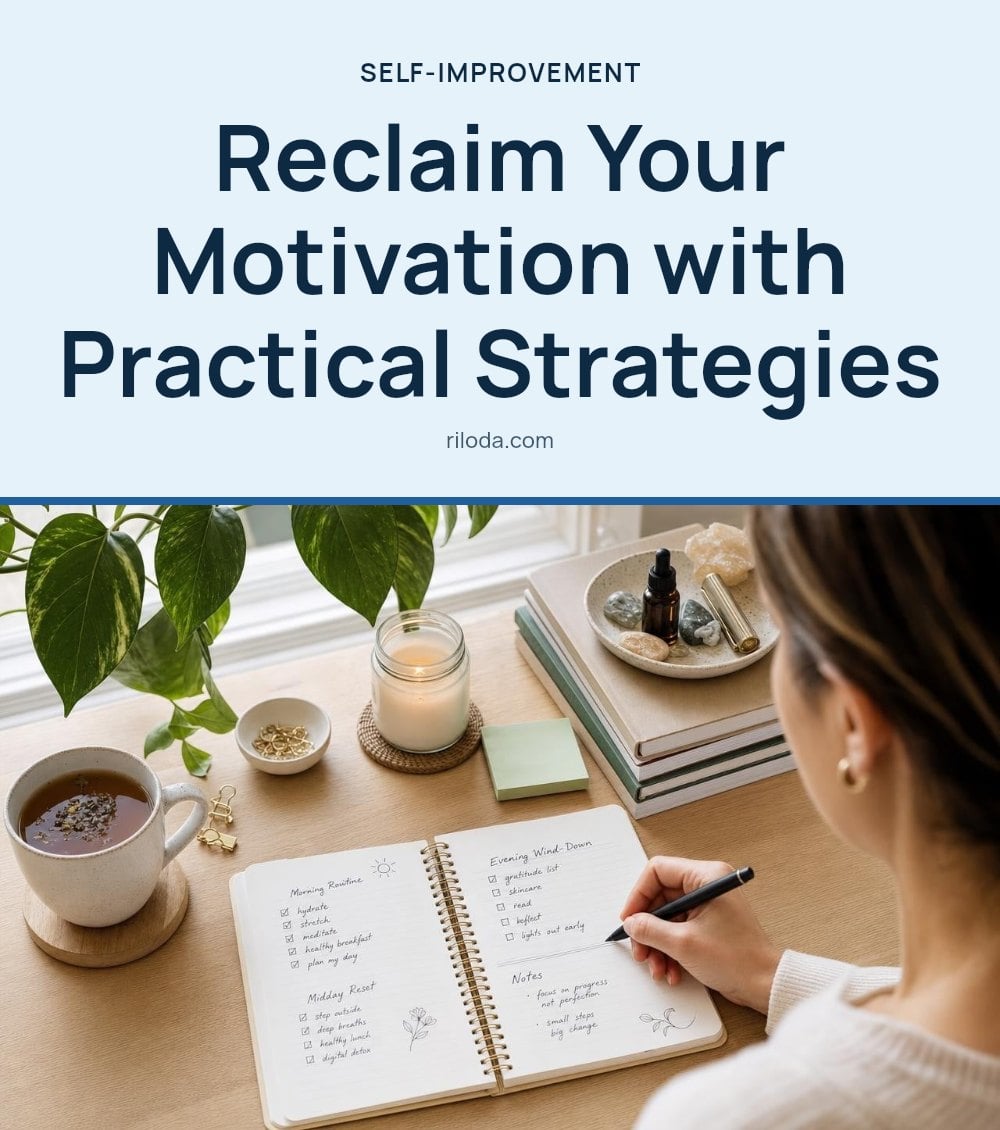
Break tasks into the smallest possible steps
Instead of “clean the house,” write “pick up shoes from the living room floor” or “wipe the kitchen counter.” Each tiny step gives you a win and builds momentum. My tip: If a step still feels too big, break it down again until it feels almost too easy.
Set a timer for short bursts
Work for 5 to 10 minutes, then take a 2-minute break. This technique, often called the Pomodoro method, reduces the pressure of starting and keeps you focused. The timer creates a clear end point, which makes the task feel temporary. After a few rounds, you can extend the work period if you feel ready.
Prioritize one thing first
Look at your list and pick the single most important or most urgent task. Do that one before anything else. Completing it gives you a sense of accomplishment and often makes the rest of the list feel lighter. If even that one feels overwhelming, start with a smaller piece of it, like opening the document or gathering your materials.
Use the two-minute rule
If a task takes less than two minutes, sending a quick email, putting a dish in the sink, hanging up a coat, do it immediately. This clears small clutter from your mental load and prevents a pile-up of tiny tasks.
Identify the root cause
Ask yourself why you are avoiding the task. Are you tired, overwhelmed, or afraid of the outcome? Addressing the underlying reason, whether it is taking a short walk, breaking the task down further, or acknowledging a fear, can help you move forward. If you notice persistent fatigue or loss of interest lasting more than two weeks, consider talking to a healthcare professional.
Reward progress
After you finish a task or hit a milestone, give yourself a small reward: a short walk, a cup of tea, or 10 minutes of reading. This reinforces the positive habit and makes the next task easier to start. Tip: Keep the reward immediate and proportional to the effort.
Common Mistakes When Trying to Get Motivated
One of the biggest traps is believing that ‘laziness’ is a permanent part of who you are. It is not a character flaw; it is a symptom. Treat it as a signal, not a label.
Another common mistake is trying to force motivation. Motivation rarely arrives on command. Instead of waiting for it, take one small action, action often creates motivation, not the other way around.
Setting unrealistic expectations also backfires. If you plan to work for four hours straight when you have been struggling to start for weeks, you are setting yourself up for failure. Start small and celebrate every bit of progress.
Underestimating basic self-care is a hidden trap. Poor sleep, skipped meals, and no movement drain your energy and make motivation nearly impossible. Treat sleep, nutrition, and exercise as foundational tools, not optional extras.
Finally, not breaking down tasks enough leads straight to overwhelm. If a task still feels huge, it is not broken down far enough. Keep splitting until each step feels doable.
Building Habits to Sustain Your Energy and Drive
Prioritize sleep: Most adults need 7-9 hours per night. Without enough rest, your brain and body can’t sustain energy or focus. Make your bedtime consistent and protect that window.
Fuel your body: Poor nutrition and dehydration often show up as sluggishness. Keep a water bottle on your desk and aim for balanced meals. Even a small snack can shift your energy.
Move a little: Physical activity doesn’t need to be a long workout. A 10-minute walk or a few stretches can boost your mood and motivation. Short bursts count.
Build routines: When you repeat the same sequence each morning or evening, your brain uses less effort to start tasks. That saved mental energy goes toward what matters.
Tidy your space: A cluttered desk or room can add to mental clutter. Spend 5 minutes clearing your immediate area before you begin work. It reduces overwhelm instantly.
When to Talk to a Healthcare Professional
If you have felt persistently unmotivated, extremely tired, sad, or uninterested in things you used to enjoy for more than two weeks, talk to a healthcare professional. These symptoms may point to an underlying condition such as depression or anxiety. Do not rely on internet advice or self-diagnosis. A doctor can help you understand what is really going on and guide you toward appropriate support.
Frequently Asked Questions
What are common physical reasons for feeling lazy?
Physical reasons can include lack of adequate sleep (most adults need 7-9 hours), poor nutrition, dehydration, and chronic stress. These factors drain your energy and can make even simple tasks feel exhausting. If you’re consistently low on energy, check your sleep, water intake, and diet first.
Can nutrition affect my motivation levels?
Yes, poor nutrition and dehydration can directly contribute to sluggishness and low energy. Keeping a water bottle handy and eating balanced meals can help stabilize your energy throughout the day. Many people find that small dietary changes improve their ability to focus and start tasks.
How can I stay motivated after a setback?
After a setback, avoid labeling yourself as lazy. Instead, identify what went wrong, adjust your approach, and restart with a very small step. Set a timer for just 5-10 minutes of work to rebuild momentum. Reward yourself for getting started again, no matter how small the task.
Is it normal to feel unmotivated sometimes?
Yes, occasional lack of motivation is completely normal. It becomes a concern when it lasts for weeks or is accompanied by extreme fatigue, sadness, or loss of interest in things you once enjoyed. In those cases, it may be a sign of an underlying condition like depression or anxiety.
What is the ‘two-minute rule’ for productivity?
The two-minute rule suggests that if a task takes less than two minutes to complete, do it immediately rather than putting it off. This could include replying to a short email, putting away a dish, or making a quick phone call. It helps clear small tasks quickly and reduces mental clutter.
Final Thoughts
Start with one tiny step today, like drinking a glass of water or clearing one surface. It won’t fix everything overnight, but consistent small actions build real momentum over weeks. Remember, motivation often follows action, not the other way around.
This article is for general informational purposes only and is not a substitute for professional medical or mental health advice. If you experience persistent lack of motivation, extreme fatigue, or a loss of interest in activities you once enjoyed for more than two weeks, please consult a healthcare professional.
More Blog ideas
- How to Use Rose Water for Radiant Skin and Healthy Hair
- What Is My Personality Type? Understanding Yourself Better
- How to Clean Your Pores at Home
- Vitamin C Benefits for Skin and Health Plus the Best Foods
- How to Start Shadow Work for Deeper Self-Understanding
- How to Prep Your Hair Before Bleaching for Less Damage
- How to Prepare Sea Moss Gel at Home for Wellness
- How to Use Rice Water for Glowing Skin and Shiny Hair
- How to Find Morning Motivation When You Want to Stay in Bed
- Filing Nails: How to File Nails Correctly for Strong, Healthy Fingernails
- Healthy Coping Skills: Proven Strategies for Difficult Times
- Simple Ways to Romanticize Your Life Every Day