How to Build Resilience and Bounce Back Stronger
Learn how to build resilience with practical strategies and a positive mindset. Discover skills to cope with stress and thrive through adversity.

We all face moments that test us, whether it’s a tough day at work, a personal loss, or just the slow grind of everyday stress. The good news is that bouncing back isn’t something you either have or you don’t. This article breaks down what resilience really is, how to build it with practical steps you can start today, and when it’s time to reach out for extra support.
Key Takeaways
- Resilience is a set of skills you can learn, not a fixed personality trait.
- Strong social connections are one of the most important factors in bouncing back.
- Regular mindfulness practice improves emotional regulation and reduces stress.
- Setting small, realistic goals builds a sense of accomplishment and self-efficacy.
- Building resilience takes consistent effort over time, with ups and downs along the way.
What Does It Mean to Be Resilient?
Resilience is the ability to adapt and recover from stress, adversity, and challenges. It’s not about avoiding difficulties but developing skills and a mindset to navigate them effectively. Building resilience is a process that can be learned and strengthened over time, like a muscle you train through practice.
Practical Steps to Cultivate Your Resilience
Start by tuning into how you react under stress. Notice your physical cues, like a racing heart or tense shoulders, and name the emotion you feel. This self-awareness is the first step to emotional regulation, a core skill you can strengthen with daily practice. Try a simple check-in each day: ask yourself what you’re feeling and why, without judging it.
- Name your emotions: When stress hits, pause and label what you feel, such as “anxious” or “frustrated.” Research shows that naming emotions reduces their intensity, which helps you respond rather than react. Keep a short journal of these moments to spot patterns over time.
- Reach out to your people: Strong social connections are one of the most reliable buffers against stress. Make a habit of texting a friend or calling a family member weekly, even when things are calm. If you’re struggling, say so plainly and ask for support; it’s a sign of strength, not weakness.
- Protect your sleep and body: Aim for 7 to 9 hours of sleep nightly, because it directly affects your mood and decision-making. Eat regular, balanced meals and move your body daily, even a 20-minute walk counts. Physical activity lowers stress hormones and lifts your mood, making every other resilience skill easier to use.
- Set tiny, realistic goals: Instead of “get healthier,” pick “walk 10 minutes after lunch.” Each small win builds your sense of accomplishment and self-efficacy, which fuels motivation. Write one goal for the week and check it off when done.
- Challenge negative thoughts: Ask for evidence when you think “I always mess up.” List times you didn’t, then reframe: “I made a mistake this time, but I can learn from it.” This cognitive restructuring helps you see setbacks as temporary, not permanent.
- Find meaning in your days: Volunteer, join a community group, or work on a creative project. Activities that give you purpose boost resilience by reminding you why you keep going, even when things get hard.
Tip: Pick one step from this list and practice it for a week before adding another. Consistency beats intensity, and these skills improve with regular use.
Strategies to Strengthen Your Coping Skills
Beyond daily habits, these strategies can strengthen your coping skills during tough times.
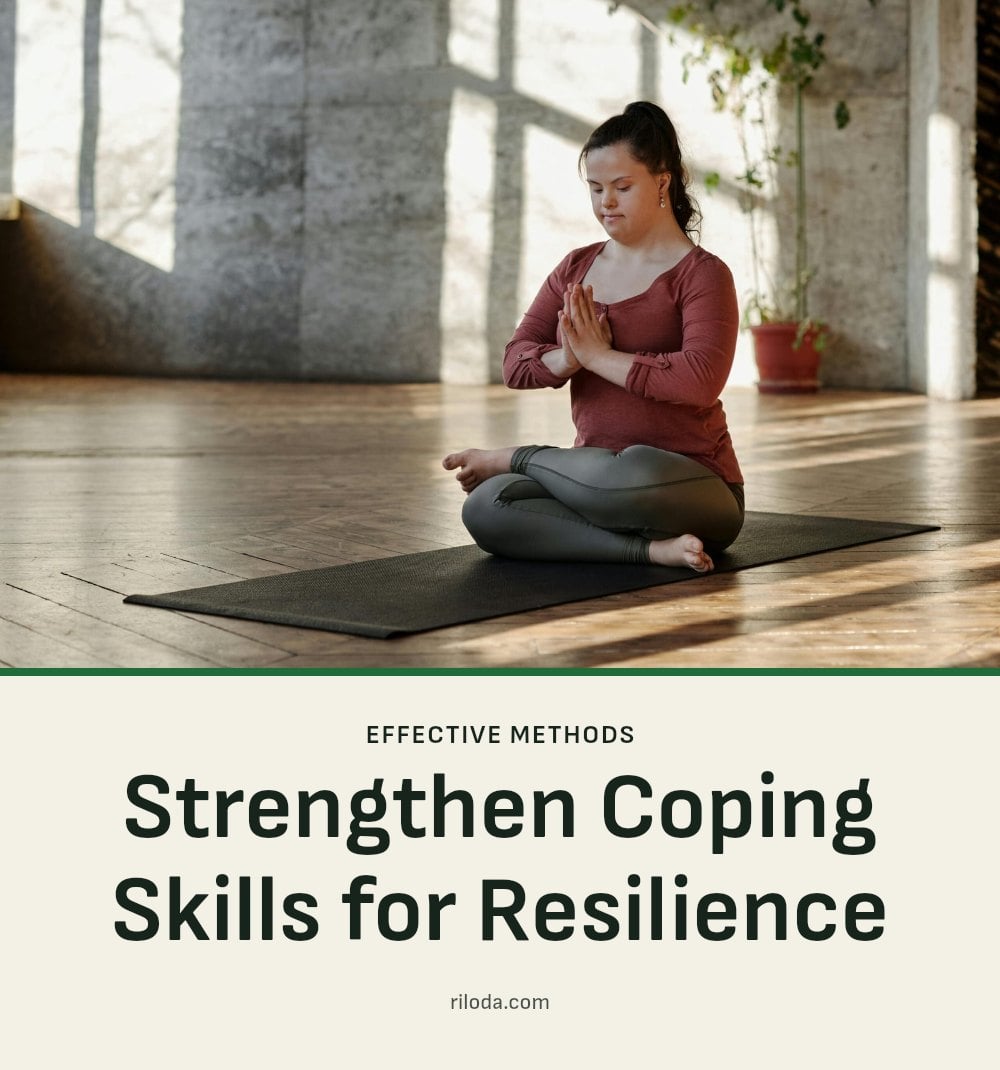
Mindfulness and meditation
- Practice even a few minutes of mindfulness each day. It improves emotional regulation and reduces stress, making it easier to handle challenges. My tip: I’ve found that a short breathing exercise before a difficult conversation calms my mind.
- Use meditation apps or guided sessions to build consistency.
Harness humor
- Use humor as a tool to gain perspective and reduce tension, not to ignore or dismiss difficult emotions. A lighthearted moment can shift your view without avoiding the real issue.
Learn from past experiences
- Reflect on what worked and what didn’t in previous challenges. Apply those lessons to current situations to build better coping strategies.
Solve problems actively
- When faced with a problem, list possible solutions and take decisive action. This builds confidence and reduces feelings of helplessness.
Maintain a hopeful outlook
- Focus on what you can control, not on what you can’t. A hopeful perspective helps you keep moving forward, even when things feel uncertain.
Common Misconceptions About Resilience
Many people misunderstand what resilience really looks like. Here are common misconceptions to watch for.
- Resilient people don’t feel pain: Resilient people experience pain but learn to navigate it effectively. Feeling hurt is part of being human, not a sign you lack strength.
- Resilience means being stoic: Resilience is not about being stoic; it involves healthy emotional expression. Crying or talking about struggles is part of bouncing back, not a failure of it.
- Wait for a crisis to build it: Resilience is an ongoing practice, not a reactive measure. Start building it now, before a major challenge hits.
- Neglect social support: Community and relationships are vital for bouncing back. Relying only on yourself can backfire.
- Confuse resilience with ‘toughing it out’: Address underlying issues rather than just enduring. Ignoring problems doesn’t build strength.
- Expect a linear path: Building resilience has ups and downs. Progress may feel slow, but that’s normal.
When to Seek Professional Support
If you’re experiencing severe or prolonged stress, anxiety, or depression, resilience strategies alone may not be enough. These tools support everyday coping but aren’t a substitute for professional care when feelings become overwhelming. A mental health professional can offer personalized guidance and treatment tailored to your situation.
Caution: If you have thoughts of self-harm or harming others, seek immediate help by calling a crisis line or going to an emergency room. You don’t have to manage this alone, and reaching out is a sign of strength.
How Long Does It Take to Build Resilience?
There’s no fixed finish line here. Building resilience is an ongoing journey, not a one-time fix, and the timeline looks different for everyone. It depends on your starting point, the challenges you face, and how consistently you practice the skills.
With regular effort, you’ll likely notice gradual improvements in how you cope. Small shifts, like pausing before reacting or reaching out sooner, tend to show up before bigger changes. Many strategies, such as mindfulness, journaling, or a daily walk, cost nothing. Professional support, if you choose it, does involve fees, but the core work is free and available whenever you’re ready.
Frequently Asked Questions
Is resilience something you’re born with?
No, resilience is not a personality trait you either have or don’t. It’s a set of skills and behaviors that can be learned and strengthened over time, much like building a muscle. Anyone can develop greater resilience with practice and the right strategies.
Can resilience be lost once it’s built?
Resilience can ebb and flow depending on life circumstances and how consistently you practice the skills. Major stress, burnout, or neglecting self-care can temporarily lower your coping capacity. The good news is that you can rebuild it again by returning to the core habits that support it.
How quickly can I see results from building resilience?
There’s no fixed timeline, and it varies for everyone. With regular effort, you may notice small improvements in how you handle daily stressors within a few weeks. Deeper changes, like shifting long-standing thought patterns, can take months of consistent practice. Be patient with yourself.
What’s the difference between resilience and being stoic?
Resilience is not about being stoic or never showing emotion. It involves healthy emotional expression, acknowledging your feelings, and then using coping strategies to move forward. Being stoic often means suppressing emotions, which can backfire. True resilience includes feeling the pain and still adapting.
Does building resilience mean I won’t feel pain or sadness?
No, resilience doesn’t eliminate pain or sadness. It means you experience those difficult emotions but have the tools to navigate them and recover. Feeling pain is a normal part of being human. Resilience helps you move through it, not avoid it.
Final Thoughts
If you take one thing from this, start with one small habit: a few minutes of mindfulness, a walk outside, or a call with a friend. Expect progress to be gradual, with good days and harder ones. Resilience is built in the small, consistent choices you make long before a crisis hits, and that’s something you can start right now.
This article is for informational purposes only and is not a substitute for professional medical or psychological advice. If you are experiencing severe or prolonged stress, anxiety, or depression, please consult a licensed mental health professional. If you have thoughts of self-harm, seek immediate help.
More Blog ideas
- How to Use Rose Water for Radiant Skin and Healthy Hair
- What Is My Personality Type? Understanding Yourself Better
- How to Clean Your Pores at Home
- Vitamin C Benefits for Skin and Health Plus the Best Foods
- How to Start Shadow Work for Deeper Self-Understanding
- How to Prep Your Hair Before Bleaching for Less Damage
- How to Prepare Sea Moss Gel at Home for Wellness
- How to Use Rice Water for Glowing Skin and Shiny Hair
- How to Find Morning Motivation When You Want to Stay in Bed
- Filing Nails: How to File Nails Correctly for Strong, Healthy Fingernails
- Healthy Coping Skills: Proven Strategies for Difficult Times
- Simple Ways to Romanticize Your Life Every Day